The Honest Plate (How Halo Decides What You Eat This Week)
real food, true numbers, no guilt.
You’ve probably started a diet on a Monday.
You found a plan online. 1,500 calories, the same for everyone. Chicken, rice and broccoli, twice a day. Breakfast at 7, while you’re still asleep. Not one dish you grew up eating.
By Thursday you were hungry at 4 pm and eating biscuits standing up. By the next Monday you’d decided you have no willpower.
Sound familiar?
That plan was written for nobody in particular, so it fitted nobody.
A good food week is quieter. It starts from what you actually burn. It puts protein in every meal. It uses food people cook where you live, at the times they eat it. And every Saturday it reads three weeks of your weight before it changes a thing.
We call it the Honest Plate, and it’s the rule book the food engine in Halo by Terramind runs on.
It’s our first version. We learn from every week people eat with it, and we keep improving it.
Every number below links to the study it came from. Where a number is our own call, we say so.
Start from what you burn
Every plan rests on one number: how much energy you use in a day.
Halo builds it from parts. Your resting burn comes from the Mifflin-St Jeor equation, worked out from 498 adults measured at rest.1 Of the common equations, it most often landed within 10% of what people really burned.2 Most often isn’t always, and we plan for that.
Then come your steps, from your phone or watch.
Then your training, from the sessions in your plan, priced with the energy costs in the 2024 Compendium of Physical Activities.3 Halo counts a quarter less than the table says. Across 1,754 adults, the body offset about 28% of extra activity energy by saving it elsewhere.4 The quarter is our call, set close to that.
Last, digestion. Breaking down a mixed diet costs 5 to 15% of the day’s energy.5 Halo uses 10%, the middle.
Your watch gets a say, but only half of one. Of seven wrist devices tested on 60 adults, none estimated energy within 20%.6 Across 56 studies, Apple Watch read energy a little high on average.7 So when your watch and Halo disagree, Halo meets it halfway. That’s our call too.
For most people, this first number will be off by 10 to 15%, by our own estimate. It’s where the plan starts. Saturdays make it right.
Go slowly enough to keep the muscle
If you want to lose weight, the pace matters more than the plan’s name.
Elite athletes who lost 0.7% of their body weight a week gained lean mass. Those who lost 1.4% a week gained none, for the same total loss.8 A review of contest prep put the pace that keeps the most muscle at about 0.5 to 1% of body weight a week.9 And eating about 500 kcal a day under what you burned was enough to stop lean mass growing with training, though strength gains held up.10
The leaner you are, the more of each kilo lost comes from lean tissue.11 So Halo sets your pace by your body fat:
- Already lean – 0.5% of your weight a week.
- More to lose – up to 1%.
- Over 60 – 0.5%, whatever your body fat, to protect muscle.
And never more than 500 kcal a day under what you burn, whatever the pace says.
The bands and that cap are our call, set inside the research’s 0.5 to 1%. US guidance on weight loss offers 500 or 750 kcal a day less.12 We took the smaller.
Building muscle runs the other way, at no more than 10% over what you burn. In trained lifters, a bigger surplus mostly added fat.13
Some people never get a pace. If you’re pregnant, under 18, or have lived with an eating disorder, Halo plans at what you burn, every week.
Protein in every meal
Protein is the number Halo protects first.
Across 49 trials, extra protein added muscle with training, and the gains levelled off above about 1.6 g per kg of body weight a day.14 A wider review of 74 trials found the benefit at 1.6 g/kg and up before 65, and at 1.2 to 1.59 from 65.15 So your daily protein follows your goal:
- Staying where you are, not lifting – 1.2 g/kg.
- Staying where you are, lifting – 1.6.
- Building muscle – 1.8, up to 2.2.
- Losing fat – 2.0, or 2.2 if you’re already lean.
How you spread it matters too. Twenty grams four times beat the same total as 10 g eight times or 40 g twice.16 About 30 g at each of three meals built 25% more muscle protein over a day than eating most of it at dinner.17
So every main meal gets at least 20 g. The floor is our call, built on those two studies.

Three groups get their own numbers:
- From 60 – older muscle needed about 0.4 g/kg in one meal to respond fully, against about 0.24 in younger men.18 So the floor rises to 25 g a meal, and the day never drops below 1.2 g/kg.
- Plant eaters – plant proteins digest a little less well and carry less leucine, and the fix is more of them, or a mix.19 Vegans eating 1.6 g/kg with soy grew the same muscle as meat-eaters over 12 weeks.20 Halo adds 0.2 g/kg and puts two protein sources in each main meal. The 0.2 is our call.
- Kidney disease – in healthy people, more protein didn’t change kidney function across 28 trials.21 With moderate to advanced kidney disease, the guideline suggests about 0.8 g/kg.22 Tell Halo and that’s what you get, with a note to check the plan with your kidney team first.
Then the rest of the plate
With protein set, fat and carbs share what’s left.
For weight loss, the split matters less than people argue. Diets from 20 to 40% fat and 35 to 65% carbs lost about the same over two years, and what tracked loss was sticking with it.23 Healthy low-fat and low-carb diets lost 5.3 and 6.0 kg in a year.24
So Halo starts from sensible defaults:
- Fat – about 30% of your energy, inside the 20 to 35% that both US and European guidance give.2526 It never drops below a floor. Cutting fat lowered testosterone in men27 and estradiol in women.28 Neither study sets a gram number, so the floor is our call.
- Carbs – the rest, and at least 130 g a day, about what the brain runs on.29 If you choose keto or low-carb, fat fills that space instead.
- Fibre – 14 g for every 1,000 kcal you eat.25 In a review of 185 studies and 58 trials, the biggest benefits came at 25 to 29 g a day.30
Change your eating pattern and the plate is rebuilt around it. Protein holds its place either way.
Real food, with its own numbers
In a lot of meal plans, the numbers next to the food were typed in by hand.
Halo builds every meal from real recipes, and every number comes from the food itself. Each ingredient is matched to a record in USDA FoodData Central, or to your region’s own food table when it has the food. A recipe’s numbers are the grams of each ingredient times its record.
Portions are sized part by part. If lunch needs 10 g more protein, the chicken grows and the rice stays as it is.
Each planned day lands within 5% of your target. That band is our call: wide enough for normal portions, tight enough that the week adds up.
Real recipes matter for more than accuracy. People offered ultra-processed meals ate 508 kcal a day more than when offered unprocessed ones matched for calories and nutrients, and gained 0.9 kg in two weeks.31
Then there’s where you live.
If you allow it, Halo asks for your city. Only the city. It puts the dishes people eat there first, and sets meal times to match.
Meal times really do move with the map. Across ten European countries, people in the south ate later, and still ate more of their day’s energy earlier.32 So lunch lands at 2 and dinner at 9 in Seville, and 12:30 and 6:30 in Leeds. In Lucknow, dinner is dal and roti at half past eight.
Only the European pattern has a study behind it. The other times are our call for now, and you can move any of them.
The nutrients plans miss
A plan can hit every calorie and still come up short on what’s inside them.
Halo checks eight that menus often miss: iron, calcium, folate, potassium, magnesium, zinc, B12 and fibre.
Your targets come from the reference tables for your age and sex, US values by default and European ones in Europe.33343536 They vary a lot. A woman of 30 needs 18 mg of iron a day. A man of 30 needs 8. Pregnancy takes it to 27.33
Halo adds them up across the whole week, so a low-iron Tuesday and a high-iron Thursday even out. Most of these nutrients are stored in the body, so the week is what counts. That part is our reasoning; no study tests it.
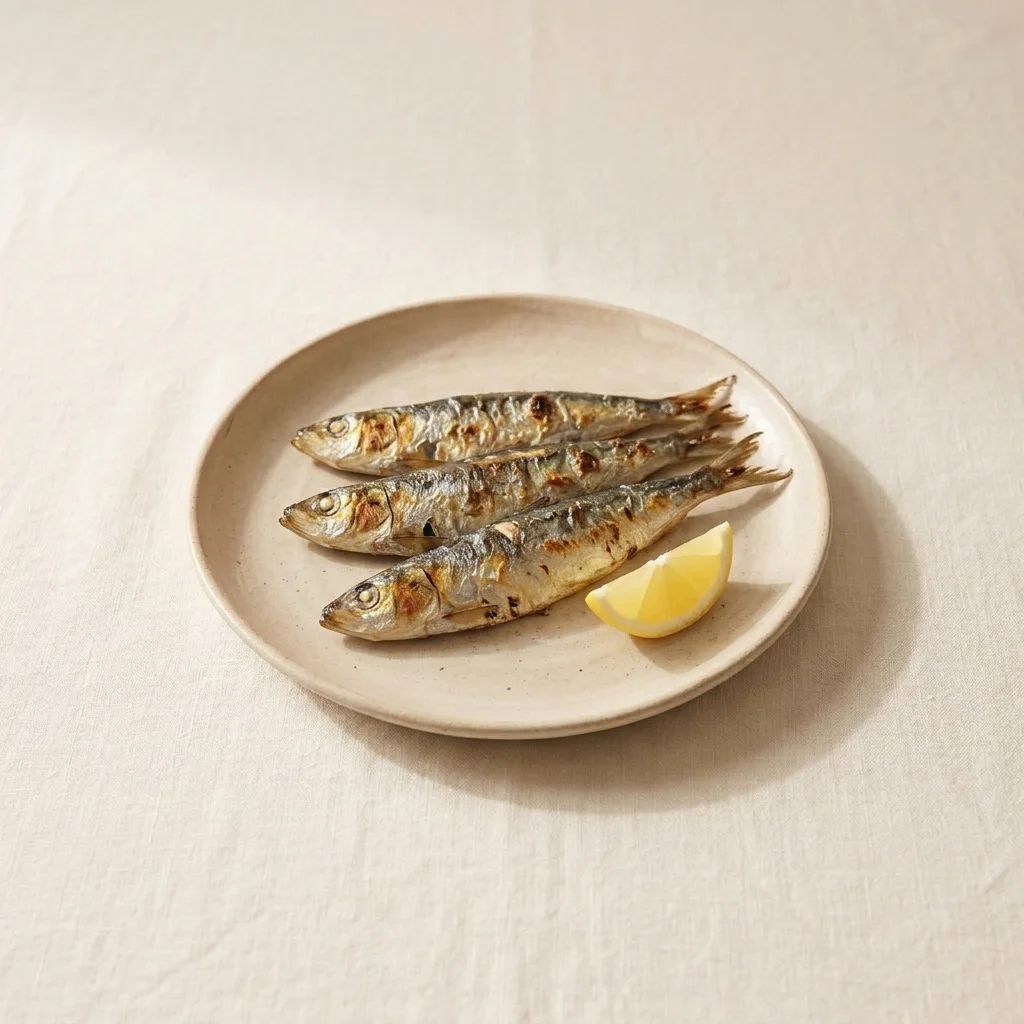
When one falls short, Halo swaps toward it. Lentils in place of rice one night. Sardines on toast for lunch. Yoghurt and seeds in place of a snack bar. Far short, and the day is redrawn. Where those lines sit is our call.
Some gaps food can’t close. If you eat no animal foods at all, B12 has to come from a fortified food or a supplement.
Your rules come first
Some things about you are rules. Halo keeps them properly.
- Halal – no pork or anything made from it, no alcohol, even in cooking, and halal meat.
- Kosher – no pork or shellfish, and meat and dairy never in the same meal.
- Jain – no meat, fish or eggs, and no root vegetables: no potato, onion, garlic or carrot.
These come from the practices themselves, so the way they’re written is our call. Tell Halo if your household keeps them differently.
Some health answers change the plan too. Halo asks. It never guesses.
- Pregnancy – no weight loss at all. Energy rises by trimester: nothing extra in the first, 340 kcal in the second, 452 in the third.25
- Breastfeeding – about 330 kcal more for the first six months.25 Any loss stays slow, at most 0.5 kg a week, and never takes you under 1,800 kcal a day. Overweight mothers who lost about that much a week, eating 500 kcal less and exercising, had babies who grew normally.37 The 1,800 is our call.
- Kidney disease – protein at 0.8 g/kg, as above.
- Insulin or tablets that lower blood sugar – skipped meals and eating less both raise the risk of a low.38 So Halo keeps at least three meals with carbs, never plans a fast, and stays within 10% of what you burn until your prescriber knows about the plan.
- Coeliac disease – strictly gluten-free, for life.39 No wheat, barley or rye, oats only when labelled gluten-free, and tamari in place of soy sauce.
Each answer adds one calm line to your plan: worth a word with your doctor or dietitian.
And if you’ve lived with an eating disorder, Halo hides the numbers. No calories, no macros, no weight trend. Portions show as plates and hands instead. Among 493 students, using calorie trackers went with more eating concern and restraint.40 We’d rather lose a chart than add to that.
Saturday, the trend decides
Your weight on any one morning tells you very little.
It swings about 0.35% within a normal week, higher after the weekend.41 It peaks on Sunday and Monday and drifts down by Friday.42 And it answers a change in food slowly, over months.43
So every Saturday, Halo fits a trend through three weeks of weigh-ins and asks one question: is this going where you wanted?
- Losing faster than your pace – 100 to 150 kcal more.
- Flat for three weeks while trying to lose – 100 to 150 kcal less, never past the 500 cap.
- On course – nothing changes.
At most one change a fortnight, so each one has time to show. The step and the fortnight are our call.
Building muscle runs the same checks the other way round.
And when weight holds, Halo says so plainly: “Weight held for three weeks, so Halo is trimming 100 kcal. If logging has been patchy, that can look like a stall too.”
The plan bends to the weeks you actually live.
Start from what you burn.
Go slowly.
Protein at every meal.
Cook what people cook where you live.
Come back Saturday.
Thank you for reading.
– The Halo team

Get a food week built like this.
Halo plans your meals from real recipes, sized to your targets, and adjusts them each week from your weight trend. Coming to iPhone.
Sources
- Mifflin et al., 1990. A new predictive equation for resting energy expenditure in healthy individuals. doi.org/10.1093/ajcn/51.2.241
- Frankenfield et al., 2005. Comparison of predictive equations for resting metabolic rate in healthy nonobese and obese adults. doi.org/10.1016/j.jada.2005.02.005
- Herrmann et al., 2024. 2024 Adult Compendium of Physical Activities. doi.org/10.1016/j.jshs.2023.10.010
- Careau et al., 2021. Energy compensation and adiposity in humans. doi.org/10.1016/j.cub.2021.08.016
- Westerterp, 2004. Diet induced thermogenesis. doi.org/10.1186/1743-7075-1-5
- Shcherbina et al., 2017. Accuracy in wrist-worn, sensor-based measurements of heart rate and energy expenditure in a diverse cohort. doi.org/10.3390/jpm7020003
- Choe & Kang, 2025. Apple Watch accuracy in monitoring health metrics: a systematic review and meta-analysis. doi.org/10.1088/1361-6579/adca82
- Garthe et al., 2011. Effect of two different weight-loss rates on body composition and strength and power-related performance in elite athletes. doi.org/10.1123/ijsnem.21.2.97
- Helms et al., 2014. Evidence-based recommendations for natural bodybuilding contest preparation: nutrition and supplementation. doi.org/10.1186/1550-2783-11-20
- Murphy & Koehler, 2022. Energy deficiency impairs resistance training gains in lean mass but not strength. doi.org/10.1111/sms.14075
- Hall, 2007. Body fat and fat-free mass inter-relationships: Forbes’s theory revisited. doi.org/10.1017/s0007114507691946
- Jensen et al., 2014. 2013 AHA/ACC/TOS guideline for the management of overweight and obesity in adults. doi.org/10.1161/01.cir.0000437739.71477.ee
- Helms et al., 2023. Effect of small and large energy surpluses on strength, muscle, and skinfold thickness in resistance-trained individuals. doi.org/10.1186/s40798-023-00651-y
- Morton et al., 2018. Protein supplementation and resistance training-induced gains in muscle mass and strength. doi.org/10.1136/bjsports-2017-097608
- Nunes et al., 2022. Protein intake to support muscle mass and function in healthy adults: a meta-analysis. doi.org/10.1002/jcsm.12922
- Areta et al., 2013. Timing and distribution of protein ingestion during prolonged recovery from resistance exercise alters myofibrillar protein synthesis. doi.org/10.1113/jphysiol.2012.244897
- Mamerow et al., 2014. Dietary protein distribution positively influences 24-h muscle protein synthesis in healthy adults. doi.org/10.3945/jn.113.185280
- Moore et al., 2014. Protein ingestion to stimulate myofibrillar protein synthesis requires greater relative protein intakes in healthy older versus younger men. doi.org/10.1093/gerona/glu103
- van Vliet et al., 2015. The skeletal muscle anabolic response to plant- versus animal-based protein consumption. doi.org/10.3945/jn.114.204305
- Hevia-Larraín et al., 2021. High-protein plant-based diet versus a protein-matched omnivorous diet to support resistance training adaptations. doi.org/10.1007/s40279-021-01434-9
- Devries et al., 2018. Changes in kidney function do not differ between healthy adults consuming higher- compared with lower- or normal-protein diets. doi.org/10.1093/jn/nxy197
- Stevens et al., 2024 (KDIGO). KDIGO 2024 guideline for the evaluation and management of chronic kidney disease. doi.org/10.1016/j.kint.2023.10.018
- Sacks et al., 2009. Comparison of weight-loss diets with different compositions of fat, protein, and carbohydrates. doi.org/10.1056/NEJMoa0804748
- Gardner et al., 2018. Effect of low-fat vs low-carbohydrate diet on 12-month weight loss (DIETFITS). doi.org/10.1001/jama.2018.0245
- Institute of Medicine, 2005. Dietary Reference Intakes for energy, carbohydrate, fiber, fat, fatty acids, cholesterol, protein, and amino acids. doi.org/10.17226/10490
- EFSA, 2010. Scientific opinion on dietary reference values for fats. doi.org/10.2903/j.efsa.2010.1461
- Whittaker & Wu, 2021. Low-fat diets and testosterone in men. doi.org/10.1016/j.jsbmb.2021.105878
- Wu et al., 1999. Dietary fat intake, serum estrogen levels, and the risk of breast cancer: a meta-analysis. doi.org/10.1093/jnci/91.6.529
- EFSA, 2010. Scientific opinion on dietary reference values for carbohydrates and dietary fibre. doi.org/10.2903/j.efsa.2010.1462
- Reynolds et al., 2019. Carbohydrate quality and human health. doi.org/10.1016/S0140-6736(18)31809-9
- Hall et al., 2019. Ultra-processed diets cause excess calorie intake and weight gain. doi.org/10.1016/j.cmet.2019.05.008
- Huseinovic et al., 2018. Timing of eating across ten European countries. doi.org/10.1017/s1368980018002288
- Institute of Medicine, 2001. Dietary Reference Intakes for vitamin A, vitamin K, arsenic, boron, chromium, copper, iodine, iron, manganese, molybdenum, nickel, silicon, vanadium, and zinc. doi.org/10.17226/10026
- Institute of Medicine, 2011. Dietary Reference Intakes for calcium and vitamin D. doi.org/10.17226/13050
- National Academies, 2019. Dietary Reference Intakes for sodium and potassium. doi.org/10.17226/25353
- EFSA, 2017. Dietary reference values for nutrients: summary report. doi.org/10.2903/sp.efsa.2017.e15121
- Lovelady et al., 2000. The effect of weight loss in overweight, lactating women on the growth of their infants. doi.org/10.1056/NEJM200002173420701
- American Diabetes Association, 2025. Glycemic goals and hypoglycemia: Standards of Care in Diabetes 2025. doi.org/10.2337/dc25-S006
- Rubio-Tapia et al., 2023. American College of Gastroenterology guidelines update: management of celiac disease. doi.org/10.14309/ajg.0000000000002075
- Simpson & Mazzeo, 2017. Calorie counting and fitness tracking technology: associations with eating disorder symptomatology. doi.org/10.1016/j.eatbeh.2017.02.002
- Turicchi et al., 2020. Weekly, seasonal and holiday body weight fluctuation patterns. doi.org/10.1371/journal.pone.0232152
- Orsama et al., 2014. Weight rhythms: weight increases during weekends and decreases during weekdays. doi.org/10.1159/000356147
- Hall et al., 2011. Quantification of the effect of energy imbalance on bodyweight. doi.org/10.1016/S0140-6736(11)60812-X
Halo is not a medical device and does not give medical advice. If you’re pregnant, breastfeeding, managing diabetes or kidney disease, or have lived with an eating disorder, check with the people looking after you first.